
vT State house ‘26
¿Desea ver esta página en español? Seleccione su idioma en la esquina superior derecha.
Quer ver esta página em português? Selecione seu idioma no canto superior direito.
Voulez-vous voir cette page en français ? Choisissez votre langue en haut à droite.
Vle wè paj sa a an kreyòl ayisyen? Chwazi lang ou anlè adwat.
آیا میخواهید این صفحه را به زبان اسپانیایی ببینید؟ زبان خود را در گوشهٔ بالای سمت راست انتخاب کنید.
VAAP’s recommendations for 2026
-
VAAP is proud to have partnered with ACLU VT to advance immigrants’ rights in 2026. See our agenda here.
-
VAAP is proud to partner with VPIRG for the 2026 session after the VPIRG Board voted unanimously to add immigration and ICE reponse advocacy to its list of priorities moving forward. Stay tuned for their agenda and how to get involved here.
-
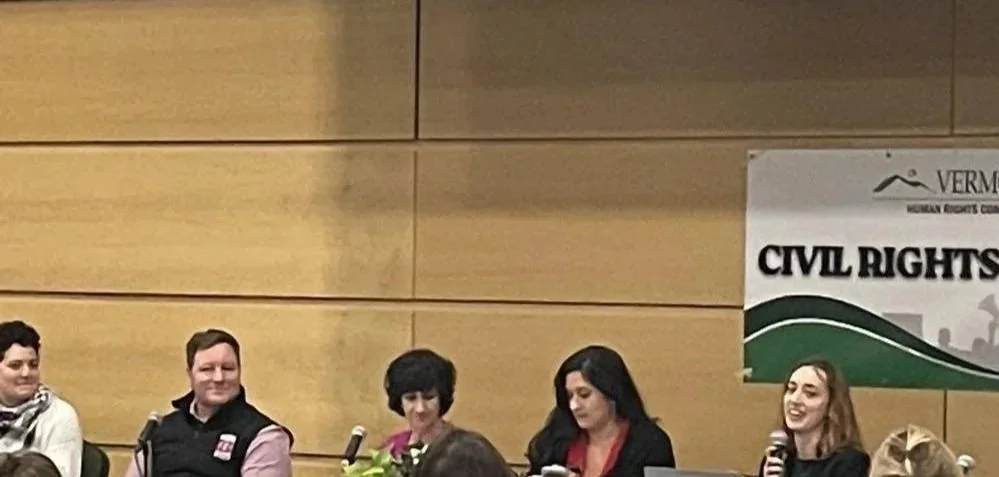
VAAP was honored to participate in the VHRC’s Civil Rights Summit on November 14–16. The Summit brought together more than 300 attendees and over 50 civil rights advocates and state leaders to examine Vermont’s civil rights landscape—and the challenges facing all of Vermont’s communities. VAAP coordinated a roundtable entitled Immigration Justice: Building a Future in Vermont, which focused on lessons learned in 2025 and recommendations for 2026:
As moderator, VAAP director Jill Martin Diaz emphasized the historical context for what we’re seeing, underscoring that the exploitation of executive immigation authority to advance authoritarianism is happening by design.
Monica Allard of ACLU VT overviewed Vermont's robust legislative and litigation histories in service of immigration Justice. Amanda Janoo of the Wellbeing Economy Alliance offered a framework for reclaiming state-level economic policymaking so the economy serves us, rather than us serving the economy.
Tracy Dolan of the State Refugee Office relayed case studies of successful pivots from the immigration and refugee services sector this year, including the launch of the Act 29 Office of New Americans Study Committee.
Mike Pieciak of the Vermont Treasury (his official capacity) and the Vermont Immigration Legal Defense Fund (in his personal capacity) reflected on the 2025 Vermont Task Force on the Federal Transition as a model for proacitve policymaking into 2026.
Mo Allard of the ACLU VT concluded with a preview of our joint 2026 State House recommendations.
A few major themes emerged:
This moment is scary—and also part of a longer history. Panelists acknowledged the fear and harm being experienced, while grounding the conversation in historical context and lessons learned: communities have faced discriminatory immigration policies before and have built strategies to fight back.
Federal power is real, but not unlimited—and Vermont has tools for checks and balances. Even when the federal government controls immigration status, Vermont can still protect safety, access, and stability through state policy and practice. We discussed Vermont’s track record of using state-level solutions to reduce harm and expand dignity, including protections around courthouses, Vermont’s Fair and Impartial Policing Policy (FIPP), and driver’s privilege cards and renewal protocols.
We need future-building, not only defense. The panel connected attacks on immigrants to broader scapegoating and “scarcity” narratives, and explored frameworks for long-term, coordinated action that prioritize collective wellbeing, participatory democracy, and community resilience.
Relentless follow-through makes the difference. A shared takeaway was that many of this year’s wins have come from coordinated, sustained effort—using tools we already have, strengthening them, and building new ones when needed.
Looking toward 2026: priorities and call to action. The conversation previewed the types of policy priorities likely to shape the next cycle, including state-funded access to immigration counsel for people detained in Vermont, improving detention conditions and access to medical/legal services, and safeguarding community spaces. Panelists also urged Vermonters and institutions to resist preemptive compliance, share accurate information (not rumors), show up for each other, and engage in the legislative process through outreach and testimony.
Our team has deeply appreciated the opportunity to be in conversation with partners across Vermont working toward data transparency, due process, and equitable access to safety and stability. We extend our gratitude to the Vermont Human Rights Commission for creating space for this dialogue—and to the community members and fellow advocates who continue to move this work forward. Read the VHRC Summit report here.
-
VAAP was proud to serve on the VT Treasurer’s Task Force on the Federal Transition 2025 and endorses the recommendations contained in the final report. Review the recommendations here.
-
During the 2025 legislative session, Vermont’s General Assembly created the Act 29 Office of New Americans (ONA) Study Committee to develop recommendations for establishing a future VT "Office of New Americans" equivalent. Read why VAAP supports an ONA-equivalent for Vermont here.
-
VAAP serves on the American Immigration Lawyers Association (AILA) New England state advocacy committee and monitors AIC’s legislative tracker to learn what’s possible for Vermont lawmaking. Access the tracker here.
-
-
ILRC tracks immigration enforcement-related lawmaking at the state-level. Review their data mapping here.
-
Golden Dome VT uses data technology to make YouTube-based testimony recordings searchable for easy on-demand reviewing. Review committee testimony by topic, venue, or speaker here.
-
VAAP is a proud member of Common Good VT and endorses its public policy and take action toolkit in our shared vision for a thriving nonprofit sector through improved operations, equity, development and employment. Review their toolkit here.